Blog / Amblyopia (Lazy Eye): Why Early Intervention is Critical for Neural Development
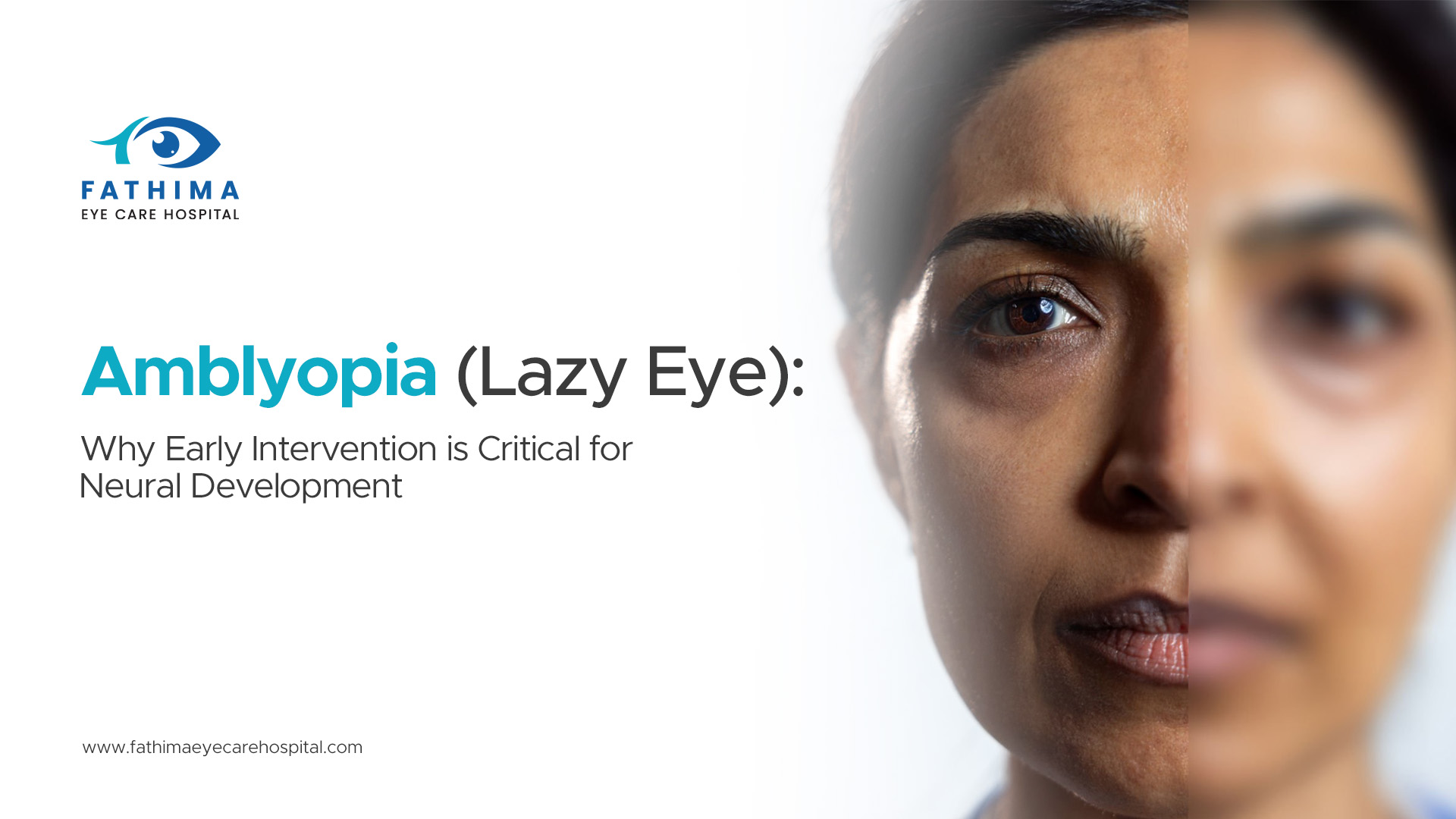
Amblyopia (Lazy Eye): Why Early Intervention is Critical for Neural Development
Did you know that amblyopia, commonly known as lazy eye, affects an estimated 1% to 5% of children worldwide? This condition, where one eye fails to achieve normal visual acuity despite no structural abnormality, poses a significant challenge to a child’s neural development and lifelong visual health. The critical window for effective treatment is during early childhood, making early intervention paramount.
Understanding Amblyopia: More Than Just a Cosmetic Concern
Amblyopia is not simply a matter of one eye looking different. It is a neurological disorder that develops when the brain doesn’t properly process input from one eye. During infancy and early childhood, the visual pathways between the eye and the brain are still developing. If one eye receives blurry or otherwise impaired images, or if the eyes are not aligned properly, the brain may start to favor the “good” eye and suppress the input from the weaker one. This suppression can lead to permanent deficits in vision in the affected eye, even if the underlying cause is corrected later.
The Developing Visual System: A Sensitive Period
The human visual system undergoes rapid development from birth through the first few years of life. This period is often referred to as a critical or sensitive period for visual maturation. During this time, the brain is highly adaptable and forms the neural connections necessary for clear, binocular (two-eyed) vision. If abnormal visual input occurs during this period, these connections may not form correctly, or they may be weakened. The brain essentially learns to “see” with only one eye, leading to amblyopia.
- Neural Plasticity: The brain’s ability to reorganize itself by forming new neural connections throughout life. In early childhood, this plasticity is at its peak, making it easier to “rewire” faulty visual pathways. As a child grows older, neural plasticity decreases, making amblyopia much harder to treat.
- Binocular Vision: The ability to use both eyes together to perceive a single, three-dimensional image. This requires precise coordination between the eyes and the brain. Amblyopia often impairs binocular vision, leading to problems with depth perception and hand-eye coordination.
Causes of Amblyopia: What Disrupts Visual Development?
Several factors can disrupt the normal development of the visual system and lead to amblyopia. Identifying these causes is the first step in diagnosis and treatment.
1. Refractive Errors: The Uncorrected Blurriness
- Strabismus (Crossed Eyes): This is the most common cause of amblyopia, accounting for approximately 50% of cases. Strabismus occurs when the eyes are not properly aligned. One eye may turn inward, outward, upward, or downward, while the other looks straight ahead. The brain receives two different images, and to avoid double vision, it suppresses the image from the misaligned eye, leading to amblyopia.
- Anisometropia: This condition involves a significant difference in the refractive power between the two eyes. For example, one eye might be severely nearsighted or farsighted compared to the other. The brain receives a much clearer image from the less impaired eye, leading it to ignore the blurrier image from the other eye.
- Isometropia: While less common than anisometropia, isometropia occurs when both eyes have a significant refractive error (e.g., both are very nearsighted or very farsighted). If the error is substantial, the brain may still favor one eye or struggle to fuse the images, potentially leading to amblyopia.
2. Deprivation Amblyopia: Obstructions to Vision
This type of amblyopia arises when something physically blocks or impairs vision in one eye during the critical developmental period. Examples include:
- Congenital Cataracts: A clouding of the eye’s lens present at birth. If not surgically corrected very early, the lack of clear light reaching the retina prevents the visual pathways from developing properly.
- Corneal Opacities: Clouding of the cornea, the clear outer layer of the eye, which can also obstruct vision.
- Ptosis (Droopy Eyelid): If a severe ptosis covers a significant portion of the pupil, it can block light from entering the eye, similar to a cataract.
3. Anisometropic Amblyopia: The Image Disparity
As mentioned under refractive errors, anisometropia is a significant cause. The brain struggles to reconcile the vastly different images, often choosing to ignore the one that is consistently out of focus. This chronic ignoring leads to the neural pathways for that eye weakening.
Symptoms of Amblyopia: Recognizing the Signs
Amblyopia can be subtle, and young children may not be able to articulate that they are not seeing clearly. Therefore, regular eye screenings are vital. However, some signs parents and caregivers might notice include:
- Poor Depth Perception: Difficulty judging distances, which can manifest as clumsiness or trouble catching a ball.
- Squinting or Closing One Eye: A child might squint or close one eye when trying to focus, especially in bright light or when looking at something far away.
- Eyes That Don’t Appear to Work Together: While not all amblyopia is due to strabismus, sometimes the misaligned eye is noticeable.
- Head Tilting or Turning: A child may tilt or turn their head to use their stronger eye to see better.
- Decreased Visual Acuity in One Eye: This is the hallmark of amblyopia, though it’s often only detectable during an eye examination.
- Reduced Contrast Sensitivity: Difficulty distinguishing between different shades of gray or seeing faint patterns.
The Critical Window: Why Early Intervention is Non-Negotiable
The effectiveness of amblyopia treatment is highly dependent on the age of the child. The younger the child, the more plastic their visual system is, and the more responsive it will be to treatment.
- Under 7 Years Old: This is considered the prime age for treatment. The brain is highly adaptable, and interventions can often restore near-normal vision.
- 7 to 10 Years Old: Treatment is still possible and can yield good results, but it may take longer and be less effective than in younger children.
- Over 10 Years Old: While some improvement may be possible, the chances of achieving full visual recovery significantly decrease. The neural pathways have become more fixed, making it much harder to overcome the brain’s established suppression.
This age-dependent effectiveness underscores why pediatric eye exams are so crucial. Identifying amblyopia early allows for timely intervention during the period when the brain is most receptive to change.

Also read: The Myopia Epidemic: Why Axial Length Elongation in Children is a Health Crisis
Diagnosis: How Lazy Eye is Detected
Diagnosing amblyopia typically involves a comprehensive eye examination by an ophthalmologist or optometrist. The process usually includes:
1. Visual Acuity Test: This is a standard eye chart test to measure how clearly each eye sees at different distances.
2. Refraction: Determining the refractive error (nearsightedness, farsightedness, astigmatism) in each eye using specialized lenses.
3. Eye Movement and Alignment Tests: Checking if the eyes are working together properly and looking in the same direction.
4. Ophthalmoscopy: Examining the internal structures of the eye, such as the retina and optic nerve, to rule out other conditions like cataracts or retinal abnormalities.
5. Cover Test: Observing how the eyes move when one is covered and uncovered. This helps detect strabismus or the tendency for an eye to drift.
Treatment Strategies: Restoring Vision in the Lazy Eye
The primary goal of amblyopia treatment is to force the brain to use and strengthen the visual pathways of the weaker eye. Treatment strategies are tailored to the individual child and the cause of amblyopia.
1. Correcting the Underlying Cause
Before or concurrently with other treatments, any underlying issues must be addressed:
- Glasses or Contact Lenses: For refractive errors like anisometropia, isometropia, or significant astigmatism, corrective lenses are prescribed to ensure the images entering both eyes are as clear as possible. This is often the first and most crucial step.
- Surgery: If strabismus is severe or caused by muscle imbalance, eye muscle surgery may be recommended to realign the eyes. For congenital cataracts or severe ptosis, surgical intervention is necessary to clear the visual obstruction.
2. Encouraging Use of the Weaker Eye
Once the visual input is clear, the next step is to make the brain pay attention to the weaker eye:
- Patching (Occlusion Therapy): This is the most common and often most effective treatment. An eye patch is worn over the stronger eye for a specified number of hours each day. This forces the brain to rely on and strengthen the vision in the weaker eye. The duration of patching depends on the severity of amblyopia and the child’s age.
- Atropine Eye Drops: In some cases, atropine drops are used in the stronger eye. Atropine dilates the pupil and blurs the vision in the stronger eye, similar to patching. This is often used as an alternative for children who are resistant to patching.
- Vision Therapy: This involves a program of specific eye exercises and activities designed to improve visual skills, coordination, and the brain’s ability to process visual information. It can be used in conjunction with patching or atropine, or as a primary treatment for certain types of amblyopia.
3. Newer Treatment Modalities
Research continues to explore innovative treatments for amblyopia, especially for older children or those who haven’t responded well to traditional methods.
- Dichoptic Training: This involves playing video games or using apps that present different images to each eye simultaneously. The goal is to control the visual input to each eye, making the weaker eye work harder. This approach is gaining traction as a more engaging alternative to patching.
The Long-Term Impact of Untreated Amblyopia
Failing to treat amblyopia during childhood can have lifelong consequences:
- Reduced Visual Acuity: The affected eye may never achieve good vision, even with corrective lenses.
- Impaired Depth Perception: Difficulty judging distances can affect daily activities, driving, and sports.
- Poor Binocular Vision: The inability to use both eyes together effectively can lead to eye strain, headaches, and fatigue.
- Increased Risk of Blindness: While the good eye usually compensates, if the stronger eye is later injured or develops a condition (e.g., detached retina, trauma), the individual could face severe vision loss or blindness.
- Social and Emotional Impact: Children with uncorrected vision problems may struggle in school, leading to frustration and low self-esteem.
Prevention and Early Detection: The Key to Success
Since amblyopia often has no obvious symptoms in its early stages, prevention through early detection is the most effective strategy.
- Routine Eye Exams: Pediatric eye care professionals recommend a comprehensive eye exam at 6 months, 12 months, and again between 2-5 years of age. Further exams should be conducted regularly as advised by the eye doctor.
- Parental Awareness: Educating parents about the signs and symptoms of amblyopia and the importance of regular eye check-ups is crucial.
- Screening Programs: School-based or community screening programs can help identify children at risk.
Amblyopia, or lazy eye, is a serious condition that can significantly impact a child’s neural development and lifelong vision. The brain’s remarkable ability to adapt during early childhood presents a critical window for intervention. By understanding the causes, recognizing the subtle signs, and prioritizing regular eye examinations, parents and healthcare providers can work together to ensure that children receive the timely treatment they need. Early detection and prompt treatment are not just about improving vision; they are about safeguarding a child’s potential and ensuring a future with clear, healthy sight.
Frequently Asked Questions (FAQ)
Q1: Can amblyopia be cured in adults?
A1: While treatment is most effective in children, some studies show limited vision improvement is possible in older children and even adults using newer techniques like dichoptic training. However, full recovery is significantly less likely than in young children.
Q2: How long does amblyopia treatment typically last?
Treatment duration varies widely, depending on the child’s age, the severity of amblyopia, and how well they respond. It can range from a few months to several years. Regular follow-up appointments are essential.
Q3: Is amblyopia hereditary?
While not directly inherited as a single gene defect, there is a genetic predisposition. Conditions that cause amblyopia, such as strabismus and refractive errors, can run in families.
Q4: Will my child’s eye go back to normal after patching?
Patching aims to improve the visual acuity of the weaker eye. While the eye’s appearance may improve if strabismus was present, the primary goal is to restore functional vision in the amblyopic eye. Continued use of glasses or other treatments may be necessary.
Q5: Can amblyopia affect both eyes?
Yes, although it’s less common, amblyopia can affect both eyes if both have significant refractive errors or visual obstructions. This is known as bilateral amblyopia.
Q6: What is the difference between strabismus and amblyopia?
Strabismus is a misalignment of the eyes, while amblyopia is poor vision in one eye that develops because the brain favors the other eye. Strabismus is a common cause of amblyopia, but amblyopia can also occur without strabismus.
Thrissur | Aluva | Perumbavoor | Kochi | Thodupuzha | Pala