Blog / MIGS Surgery: Precision, Safety, and Faster Recovery for Glaucoma Patients
MIGS Surgery: Precision, Safety, and Faster Recovery for Glaucoma Patients
The major reason behind glaucoma is the increase in intraocular pressure (IOP) in the eye. The MIGS or Minimally Invasive Glaucoma Surgery, is a collection of surgical procedures designed to lower intraocular pressure in patients with mild to moderate glaucoma. Unlike conventional glaucoma procedures like trabeculectomy, MIGS procedure benefits include faster recovery, reduced risk of complications, and minimal disruption to the eye’s natural anatomy. It’s cutting-edge technique which involves the use of tiny incisions and microscopic equipment for surgery procedures. In this blog, we will discuss the benefits of MIGS, how it works and additional key information.
What Is MIGS and How Does It Work?
MIGS works by improving the efficiency of the eye’s natural drainage system to lower pressure. In glaucoma, the fluid inside the eye does not drain properly, causing the pressure to build up. MIGS surgery gently opens up the eye’s existing drainage channels for the fluid to flow out more easily, unlike traditional surgery where a new drainage opening is created.
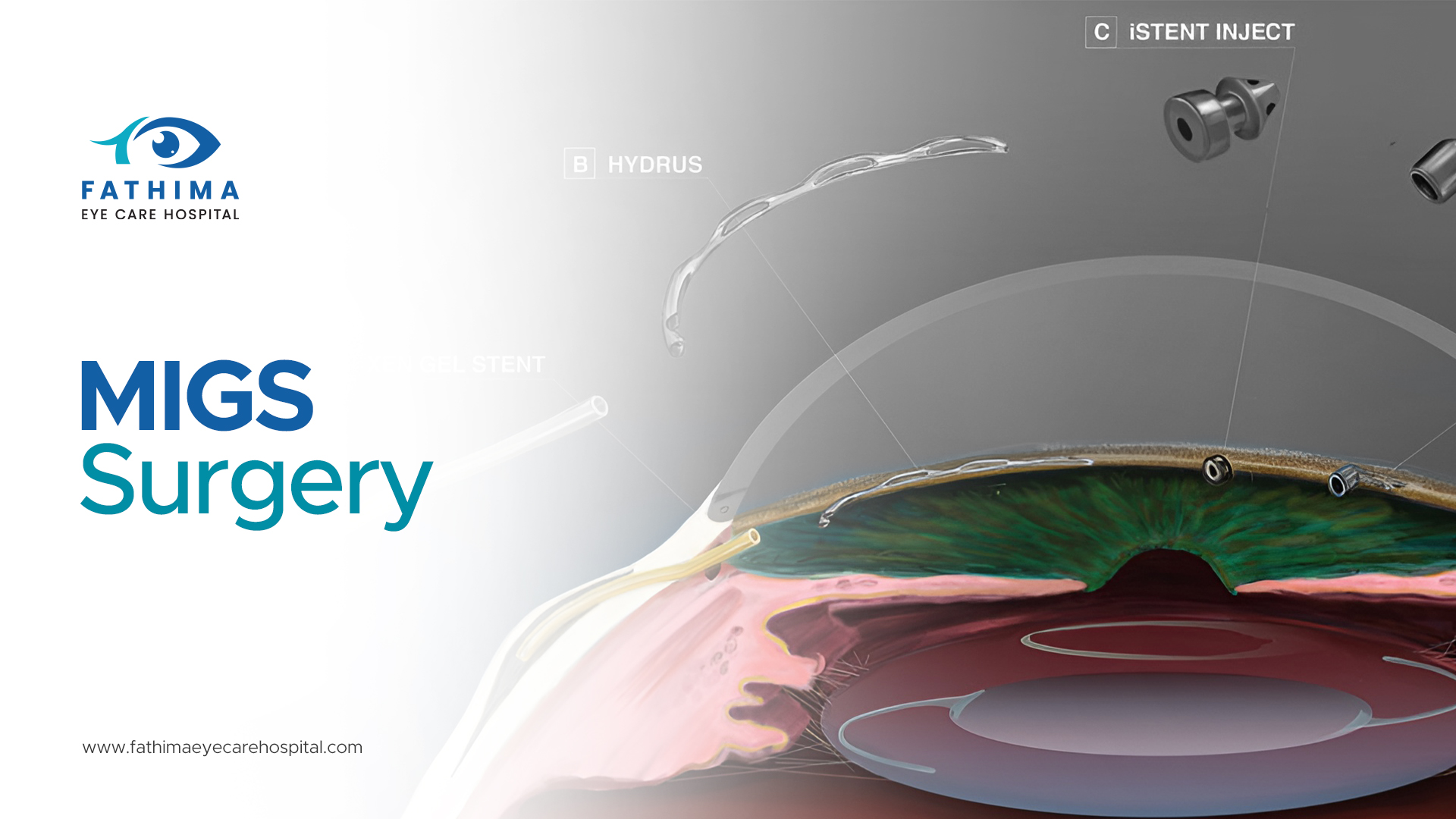
While fixing the fluid drainage, certain tiny medical devices are utilized during MIGS surgeries. These might be micro-stents, extremely small implants, or canal-based devices that are inserted through very small incisions. They serve to keep the natural drainage pathway open, allowing fluid to move more freely and lowering eye pressure. As the drainage starts to accommodate the fluid more efficiently, the flow becomes smoother, balance is restored and intraocular pressure decreases, significantly reducing the hidden risks associated with glaucoma.
Benefits of MIGS
There are a handful of advantages MIGS has over the traditional treatment procedures for curing glaucoma.
1) Enhanced Safety Profile : Since the procedures involved in MIGS surgery are relatively less riskier than traditional treatment methods, patients experience fewer complications during and after the procedure. The major factor contributing to the low risk rate is the use of smaller incisions and less tissue disruption during the procedure.
2) Faster Recovery : Another important aspect in the MIGS procedure benefits is the quicker recovery process. The majority of patients who leave the hospital after the surgery experience minimal post-operation discomfort and return to daily life activities within a few days, or perhaps a week. This clearly gives MIGS a clear advantage over the traditional procedures.
3) Reduced Medication Burden : One of the primary advantages for a large number of patients, is the option to minimize or even entirely remove the use of anti-glaucoma eye drops that have to be administered on a daily basis to regulate their intraocular pressure (IOP) in some instances. This raises the quality of life and adherence to treatment.
4) Relation with Cataract : MIGS is often done along with cataract surgery, so both problems can be fixed in the same way through one single incision, which remarkably reduces the number of operations required and puts emphasize on the well-being on the patient.

Who all can undergo MIGS?
There are different types of people who may be eligible for MIGS treatment. Whether someone can undergo this procedure depends on how severe their glaucoma is and how effectively it can be managed with this method. MIGS procedures are primarily designed for patients in the early to moderate stages of open-angle glaucoma, and those with severe cases require other advanced treatments. As mentioned above, it is ideal for those undergoing cataract surgery who also have glaucoma. Lastly, the patients who experience significant side effects from glaucoma medications, for instance dry eye, irritation, or have difficulty physically administering the drops on a daily basis could find MIGS helpful in reducing the need for multiple eye drops.
What to Expect During and After the Procedure?
Individuals undergoing a MIGS operation can anticipate a fast and minimally invasive type of surgery. It is performed under local (topical) anesthesia, which means numbing eye drops are applied to the surface of the eye. In general, there are no or very mild discomforts reported by the patients. After the operation, individuals may be prescribed a few eye drops, mandatory follow-ups and are often requested to refrain from lifting weights or engage in strenuous activities for a while. Recovery is generally smooth, and vision often begins to stabilize quickly, allowing patients to return to their normal routine sooner than with traditional glaucoma surgery. The overall experience is designed to be gentle, efficient and patient-friendly.
With the availability of new glaucoma surgery techniques like MIGS, patients now have several treatment choices that are suited for their treatment plans. If you are on the lookout for details regarding various aspects of MIGS such as eligibility, steps involved in the procedures or glaucoma stent cost, then getting in touch with any of our Fathima Eye Care glaucoma specialists will help you make an informed decision.
Thrissur | Aluva | Perumbavoor | Kochi | Thodupuzha | Pala