Blog / Diabetic Retinopathy: Stages, Symptoms, and The Need for Timely Treatment
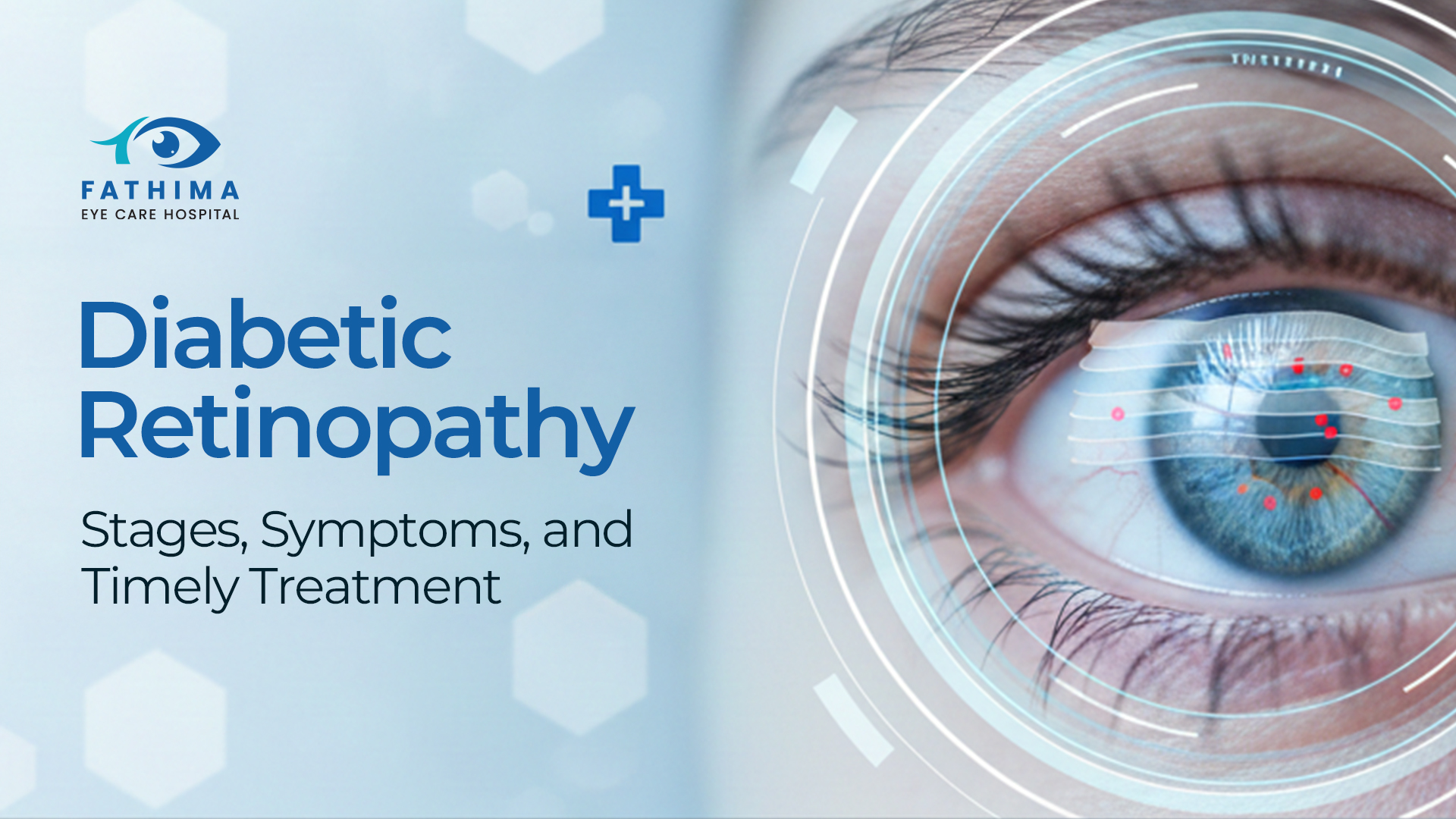
Diabetic Retinopathy: Stages, Symptoms, and The Need for Timely Treatment
Diabetes can silently affect different parts of the body, and the eyes are among the most sensitive. One of the most common and serious eye complications is diabetic retinopathy, a condition that damages the retina – the light sensitive layer at the back of the eye that plays a vital role in vision. If left untreated, it can lead to severe vision loss or even blindness.
How Diabetic Retinopathy Develops
When blood sugar levels stay high for long periods, the small blood vessels that supply the retina become weak or blocked. They may leak fluid or blood, causing swelling, and affecting how the retina works. As the disease progresses, fragile new blood vessels may start to grow, which can lead to bleeding, scarring, or other vision problems.
Stages of Diabetic Retinopathy
The stages of diabetic retinopathy usually progress slowly and may not show early warning signs.
- Mild Non Proliferative Retinopathy – Small bulges appear in the retinal blood vessels, often without symptoms.
- Moderate Non Proliferative Retinopathy – Some blood vessels become blocked, reducing the flow of blood to parts of the retina.
- Severe Non Proliferative Retinopathy – More blood vessels are blocked, cutting off oxygen to larger areas of the retina.
- Proliferative diabetic Retinopathy – New, abnormal blood vessels grow on the surface of the retina and may leak blood, leading to serious vision problems.
Diabetic Retinopathy Symptoms
In the early stages, there may be no visible signs of vision changes. However, as the condition worsens, diabetic retinopathy symptoms may include:
- Blurred or fluctuating vision
- Floating dark spots or shadows
- Difficulty seeing at night
- Sudden or partial vision loss
Because these symptoms may appear late, the importance of a diabetic eye examination cannot be overstated. Regular eye checkups help detect even small changes in the retina before they lead to permanent damage.

The Importance of Timely and specialized Care
Timely treatment plays a major role in protecting vision and preventing serious eye problems caused by diabetic eye disease. Today, there are several advanced and effective treatment options available for different retinal conditions. One of the most common difficulties related to diabetic retinopathy is Diabetic Macular Edema (DME). This occurs when fluid leaks into the macula, which is the central part of the retina responsible for clear and detailed vision. The leakage causes swelling and blurred sight. Modern DME solutions such as anti – VEGF injections, help reduce this swelling. These injections work by blocking the growth of abnormal blood vessels, and preventing further leakage, which helps stabilize or even improve vision.
Specialized retinal care also includes ROP (Retinopathy of Prematurity) services. This condition affects premature infants whose eye blood vessels are not fully developed at birth. Early screening and timely treatment are essential to prevent long term vision problems, and in many cases, this care becomes truly life saving for premature babies.
It is also important to be aware of flashes and floaters. These appear as small spots, flickers, or light streaks that move across your vision. While they may seem harmless, a sudden increase in flashes or floaters can be an early sign of retinal detachment , which happens when the retina pulls away from its normal position. This is a medical emergency and requires immediate care from a retina specialist to prevent permanent vision loss.
With early diagnosis, expert treatment, and regular checkups, most diabetic and retinal conditions can be effectively managed, helping you maintain clear and healthy vision.
Protecting your Vision
Keeping your blood sugar , blood pressure, and cholesterol under control greatly helps slow the progression of diabetic eye disease. Combined with regular eye examinations and timely medical care, these steps can protect your eyesight and ensure long term eye health.
In short, diabetic retinopathy may develop silently, but with regular monitoring, early treatment, and expert guidance, it is possible to preserve your vision and enjoy a healthy, active life.
Thrissur | Aluva | Perumbavoor | Kochi | Thodupuzha | Pala